Navigating Career Choices in the Age of Rapid Automation: A Student's Guide
A practical guide for Class 12 students (especially PCM) on choosing a career path as automation reshapes the job market. Covers how to spot automatable vs. resilient skills and where project-based tech courses like MERN Stack Mastery fit into the decision.
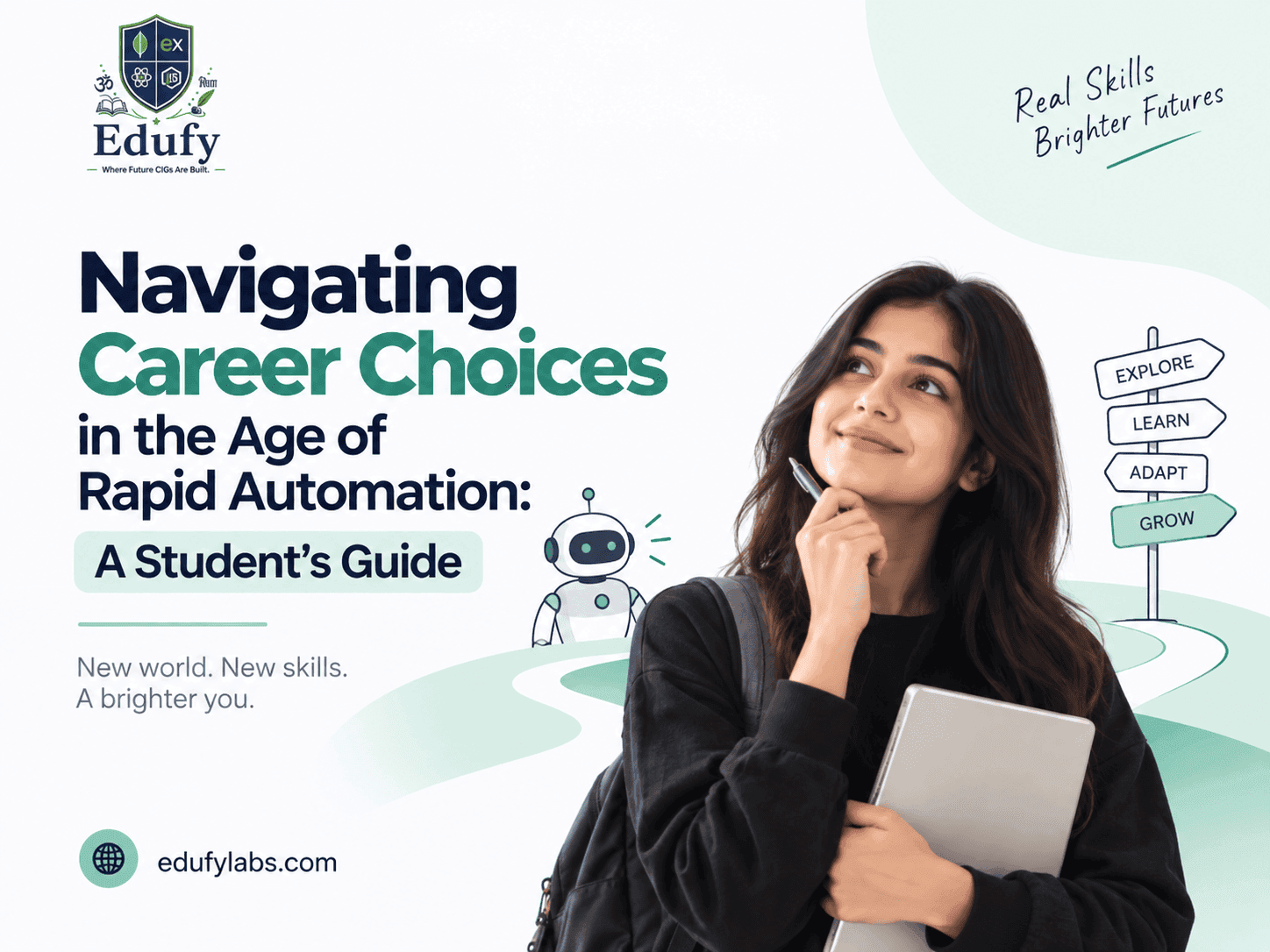
If you're a Class 12 student in Kolkata staring at a stream selection form, or a parent trying to figure out which "safe" career even exists anymore, you're asking the right question at the right time. Automation and AI aren't a distant threat; they're already reshaping which skills employers pay for. This guide breaks down how to think about career choices after 12th, why career choices after 12th PCM look different in 2026 than they did five years ago, and where automation courses actually fit into the picture.
Why the Old Career Map No Longer Works
For decades, "safe" careers meant a fixed list: engineering, medicine, government services, chartered accountancy. That list isn't wrong; it's incomplete. According to the World Economic Forum's Future of Jobs Report 2025, nearly 39% of the core skills required across jobs globally are expected to change by 2030, with technological literacy, AI, and big data topping the list of fastest-growing skill demands. The India Skills Report 2026 adds a local data point worth noting: over 90% of Indian employees have already started working with generative AI tools in some capacity.
That doesn't mean traditional degrees are obsolete. It means the degree alone is no longer the differentiator; what you can build with it is.
For PCM Students: Rethinking "Engineering or Bust"
Students with a PCM background are often pushed toward a narrow funnel: JEE, then a core branch, then a campus placement. In our experience mentoring PCM students at Edufy, the ones who stand out in interviews aren't necessarily the ones with the highest marks; they're the ones who've shipped something real, whether that's a working app, a small automation script, or a class project that solved an actual problem.
This is where a skills-first path matters. A PCM student headed into computer science, IT, or even a non-CS engineering branch benefits enormously from picking up practical, in-demand technical skills early, not as a replacement for their degree, but as proof of applied competence.
The Nuance: Not Every Path Needs to Be Technical
It's worth being honest here: not every student is going to enjoy coding, and that's fine. Fields like healthcare, skilled trades, design, and hands-on creative work remain resilient precisely because they require human judgment, physical presence, or empathy that automation struggles to replace. The goal isn't "everyone must learn to code." It's "know which of your skills are automatable, and build depth where they aren't."
Where Automation Courses Actually Help
A well-structured automation or tech course does two things: it teaches you tools that are in active demand, and it gives you a portfolio piece you can show, not just describe. When we tested this approach with our own cohort structure, the biggest gap wasn't motivation; it was students not knowing what to build or how to go from tutorial-following to shipping something original.
That's the specific gap our MERN Stack Mastery program is built to close. Instead of isolated coding exercises, students go from fundamentals to deploying a real, production-hosted full-stack application covering MongoDB, Express, React, Node.js, and modern deployment to platforms like AWS and Vercel. For a PCM student weighing career choices after 12th, this kind of project-based proof can matter more on a resume than an extra mark or two on a college transcript.
If you're earlier in the decision process, our post on AI Skills Every Student Needs Before Graduation is a useful next read.
A Practical Way to Decide
List what you enjoy building or solving, not just what scores well.
Check which of those tasks are automatable—repetitive, rule-based work is at higher risk; judgment-heavy, creative, or interpersonal work is more resilient.
Get one real project done, in any domain, before making a final call. Proof beats prediction.
Ready to Build Something Real?
Career choices after 12th don't have to be a guessing game. If you want practical, in-demand skills backed by a real project, not just theory, Edufy's MERN Stack Mastery program is designed for exactly that: live mentor-led classes, hands-on builds, and a portfolio-ready application by the end of the cohort.
Talk to a mentor and see if MERN Stack Mastery is right for you →
FAQs
Is it necessary to know coding after PCM?
No, but it significantly widens your options. Even non-CS PCM students benefit from basic technical fluency.
Are automation courses worth it for non-engineering students?
Yes, if applied to your field, automation and AI tools are increasingly used in finance, marketing, and design, not just software roles.
How long does it take to become job-ready with a course like MERN Stack Mastery?
Program length varies by structure; Edufy's current MERN Stack Mastery track runs over several weeks with mentor-led, project-based learning. Exact timelines are listed on the program page.
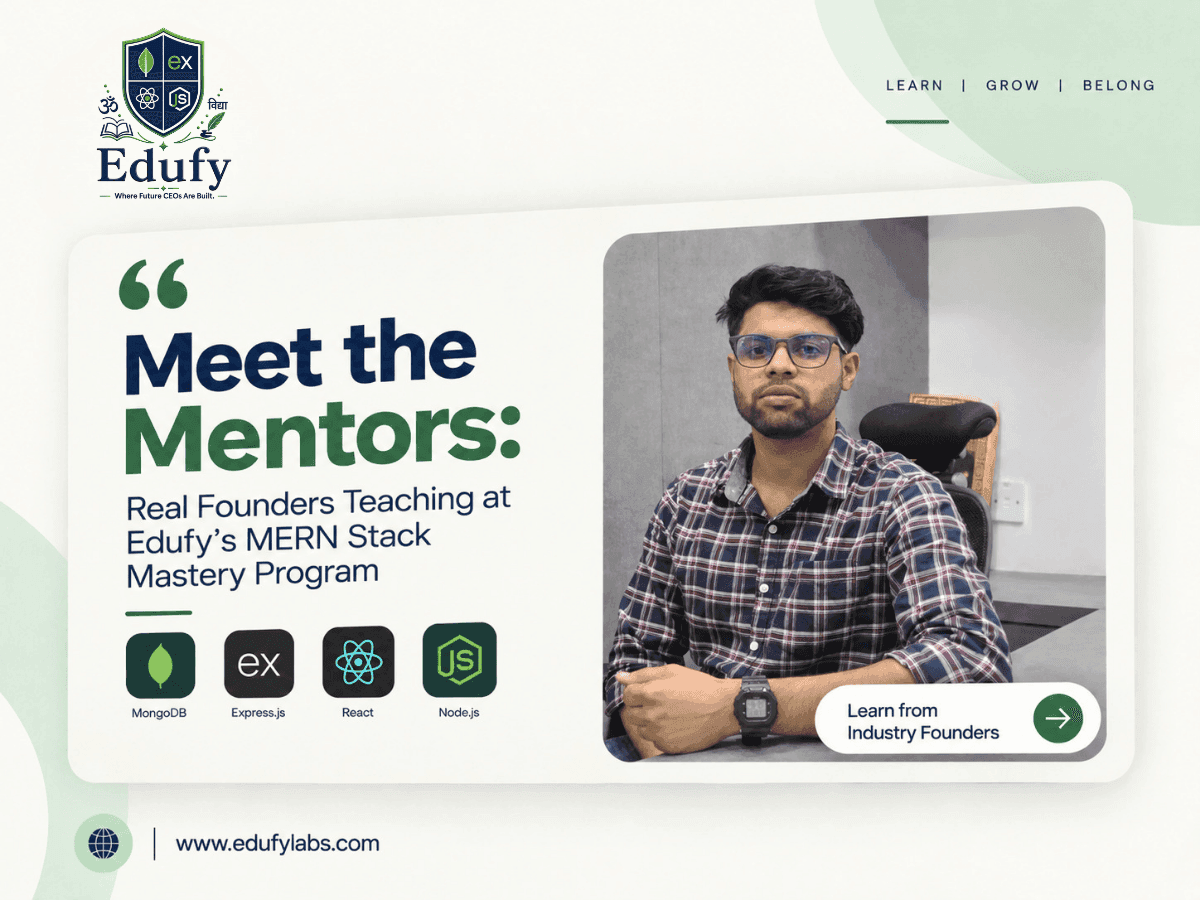
Meet the Mentors: Real Founders Teaching at Edufy's MERN Stack Mastery Program
Meet the Mentors: Real Founders Teaching at Edufy's MERN Stack Mastery Program
Read story
5 Lessons Our Mentors Wish School Teachers Also Taught
School teaches subjects well, but life skills like handling failure or managing money often get left out. Our mentors share five real-world
Read story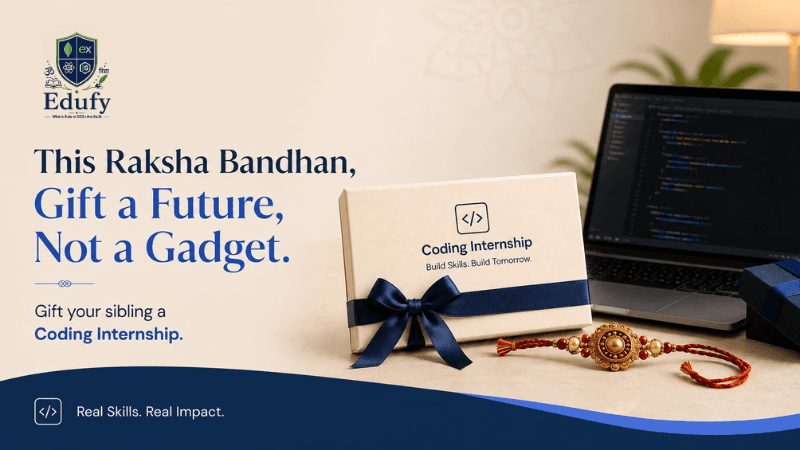
Why a Course Beats a Gadget This Raksha Bandhan: Gift Your Sibling a Coding Internship, Not Another Gadget
Skip the usual gadget this Raksha Bandhan — Edufy Labs makes the case for gifting your sibling a coding internship instead, one that actuall
Read story